







-
Typhoon No. 30 moves northward near Okinawa, bringing extremely rough seas [Marine Summary (October 18–24, 2026)]
2026/10/28 07:39
-
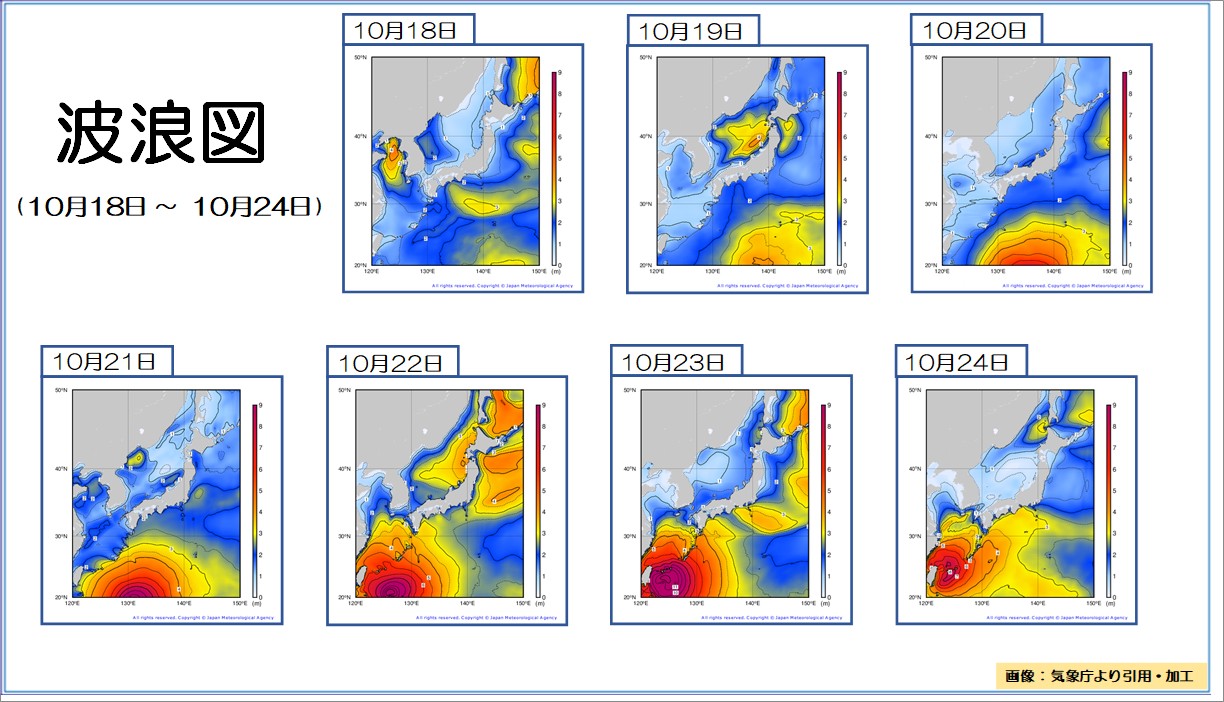
"Typhoon No. 30 moved in a generally westward direction east of the Philippines before turning northward near Okinawa. As a result, wave heights increased across a wide area surrounding the typhoon, with extremely rough sea conditions occurring in regions stretching from south of Japan to south of Okinawa, as well as in the waters near Okinawa.
In the seas surrounding Japan, the area where sea surface temperatures were slightly higher than average expanded.
Summary of Ocean Conditions (October 18 - October 24, 2026)
# Pressure Patterns and Waves
On the 18th, a low-pressure system east of the Kamchatka Peninsula moved eastward. A steep pressure gradient between this system and a high-pressure area near Japan caused rough sea conditions in the Sea of Okhotsk. Strong winds also developed along the periphery of the high-pressure system, leading to rough seas south of Honshu.
From the 19th to the 20th, a low-pressure system moved from the Sea fo Japan toward the area east of the Kuril Islands (Chishima Islands). On the 19th, sea conditions were rough in the central part of the Sea fo Japan.
From the 19th to the 24th, Typhoon No. 30 moved westward east of the Philippines and then northward near Okinawa. Waves intensified over a broad area around the typhoon; from the 21st to the 23rd, extremely rough sea conditions were observed in waters from south of Japan to south of Okinawa, and in the vicinity of Okinawa.
From the 22nd to the 23rd, a low-pressure system accompanied by a front moved from the Sea of Okhotsk toward the area east of the Kamchatka Peninsula, resulting in rough seas in the Sea of Okhotsk and east of Japan.
# Sea Surface Temperatures
In the waters surrounding Japan, the area where sea surface temperatures were slightly higher than average expanded. Areas with sea temperatures higher-and in some cases, significantly higher-than average were observed, with temperatures reaching up to 4C above normal.
In the East China Sea, the area where temperatures are slightly above average has expanded.
Temperatures were slightly higher than average in the region stretching from the Nansei Islands to the waters off Shikoku and the Kanto region.
East of the Kanto region, areas with temperatures significantly higher than average have emerged, while off the Sanriku coast, the area with above-average temperatures has shrunk.
Southeast of Hokkaido, the area with temperatures significantly higher than average persists, with values ??reaching up to 5C above normal.
In the waters near the Kuril Islands and in the Sea of Okhotsk, temperatures remain slightly above average."
-
Be mindful of temperature fluctuations over the next week; adjust your clothing accordingly to manage your health.
2026/10/27 20:55
-
Tomorrow, Wednesday the 28th, cold air will move into Japan, causing temperatures to drop nationwide compared to today, Tuesday the 27th. The morning chill will intensify the day after tomorrow, Thursday the 29th, and the week ahead is expected to see significant fluctuations in temperature.
Please take care to adjust your clothing appropriately and stay mindful of your health.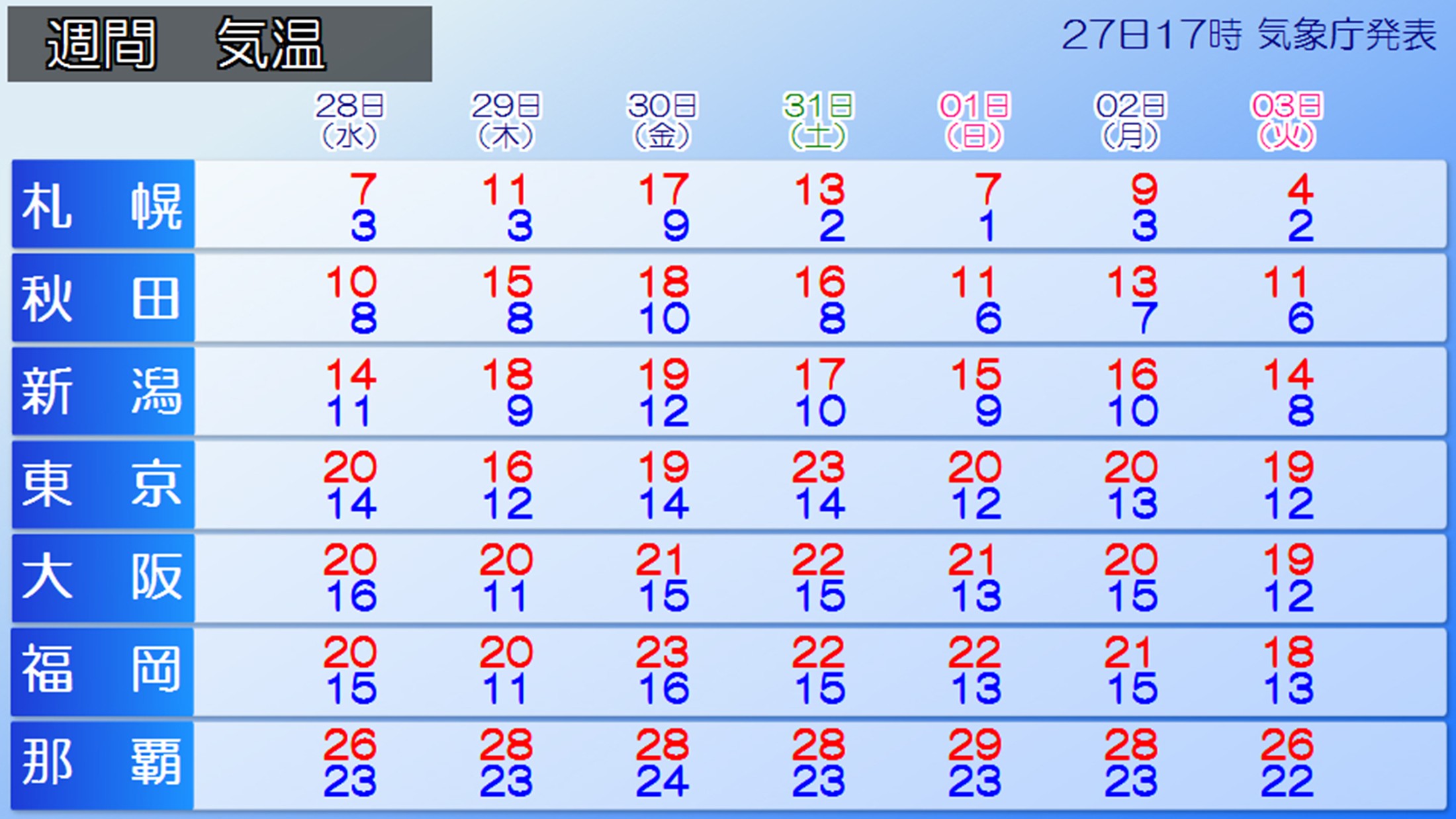
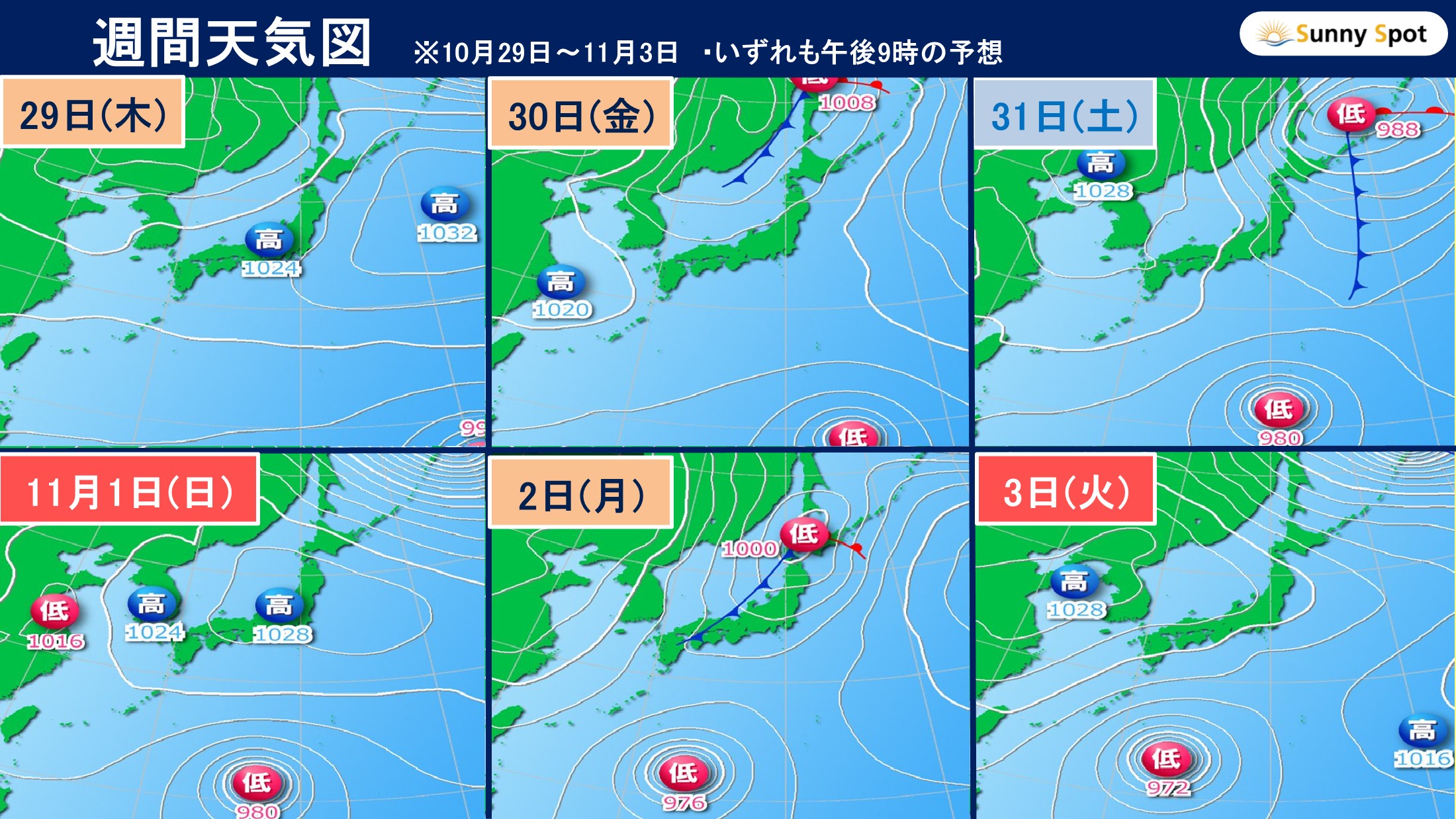
Tomorrow, Wednesday the 28th, cold air from the upper atmosphere will shift southward. A temporary "west-high, east-low" pressure pattern will develop, drawing in further cold air and causing temperatures across the country to drop significantly compared to today, Tuesday the 27th.
In Hokkaido, snow may fall even in lowland areas, while cold rain is expected along the sea of Japan side of Honshu, creating a chilly atmosphere.
Along the Pacific coast, northerly winds will make the air feel quite cool.
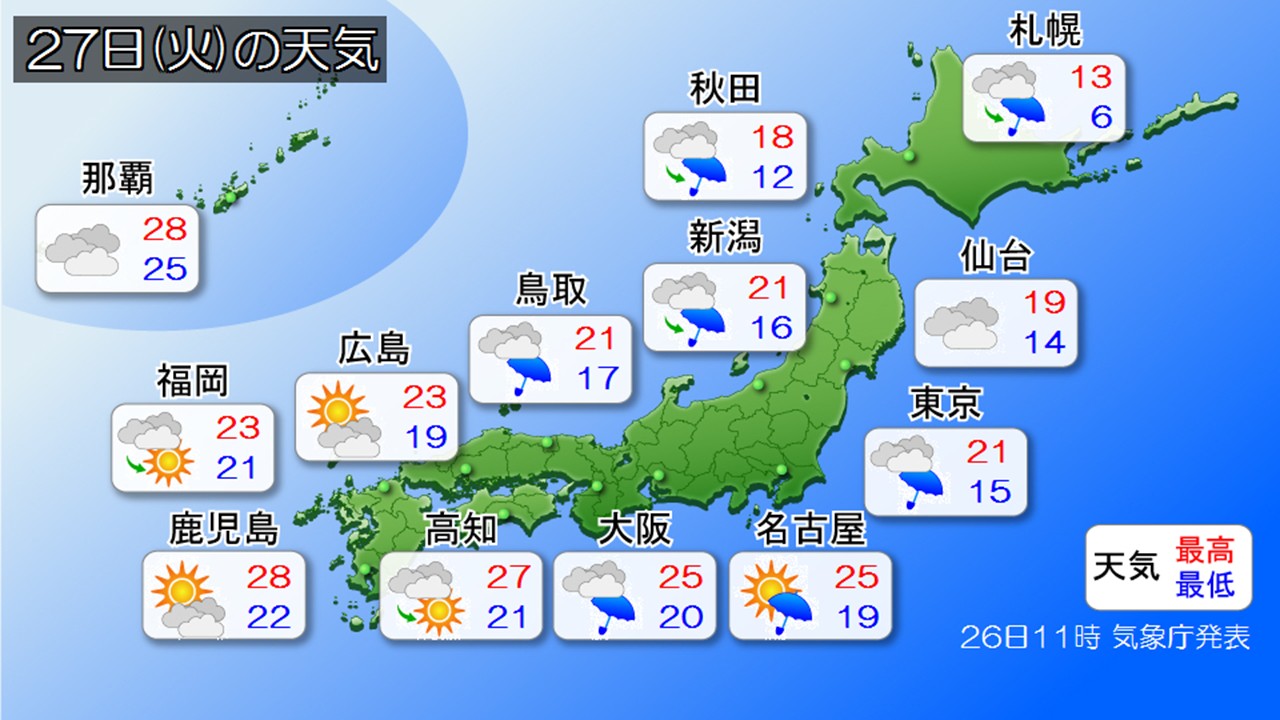
Daily high temperatures will drop sharply-falling into the single digits in Hokkaido, hovering around 10C in the Tohoku region, and reaching approximately 15C along the sea of Japan side of eastern and western Japan (a significant decrease from today due to the cold air). Along the Pacific coast, highs will be around 20C.
On the morning of Thursday the 29th, the chill will intensify, with forecast lows of 3C in Sapporo, 9C in Niigata, 12C in Tokyo, 11C in Osaka, and 11C in Fukuoka. Some areas may experience their coldest temperatures of the season so far.
Looking further ahead, the periodic passage of low-pressure systems and fronts will bring changing weather and recurring influxes of cold air, leading to significant fluctuations in temperature. Temperatures are expected to rise in Northern Japan and the Hokuriku region around Friday the 30th, while in the Kanto region and Western Japan regions, daily highs may exceed 20C around Saturday the 31st.
In Northern Japan, temperatures will drop following the passage of low-pressure systems as colder air moves in-a cycle that will gradually usher in the next season.
Additionally, there may be significant temperature differences between the day and the morning or evening; please adjust your clothing accordingly-for instance, by keeping a warm outer layer on hand. Be sure to check the daily weather forecast and take care of your health during this seasonal transition.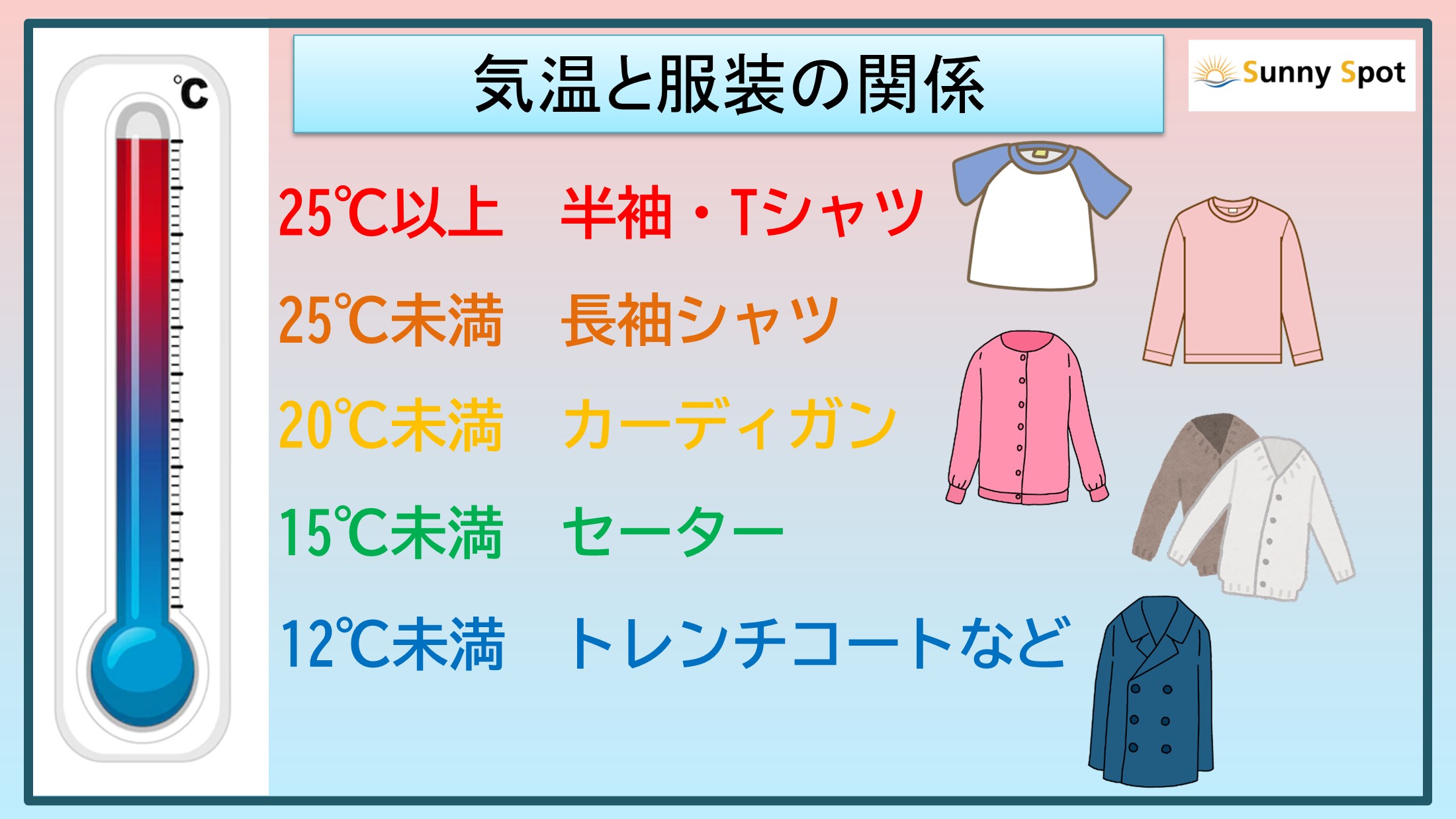
While individual sensitivity to heat and cold varies, here is a general guide: a cardigan is typically needed when temperatures fall below 20C, while a trench coat or similar outerwear becomes appropriate when temperatures drop below 12C.
Please use this as a reference for choosing your attire based on the temperature.
-
Weather Summary (October 18–24): Record-breaking October rainfall in some areas due to Typhoon 30 and low-pressure systems
2026/10/27 18:56
-
A summary of the weather and temperatures from October 18 to October 24, 2026.
Weather Overview for the Period
Pressure Patterns
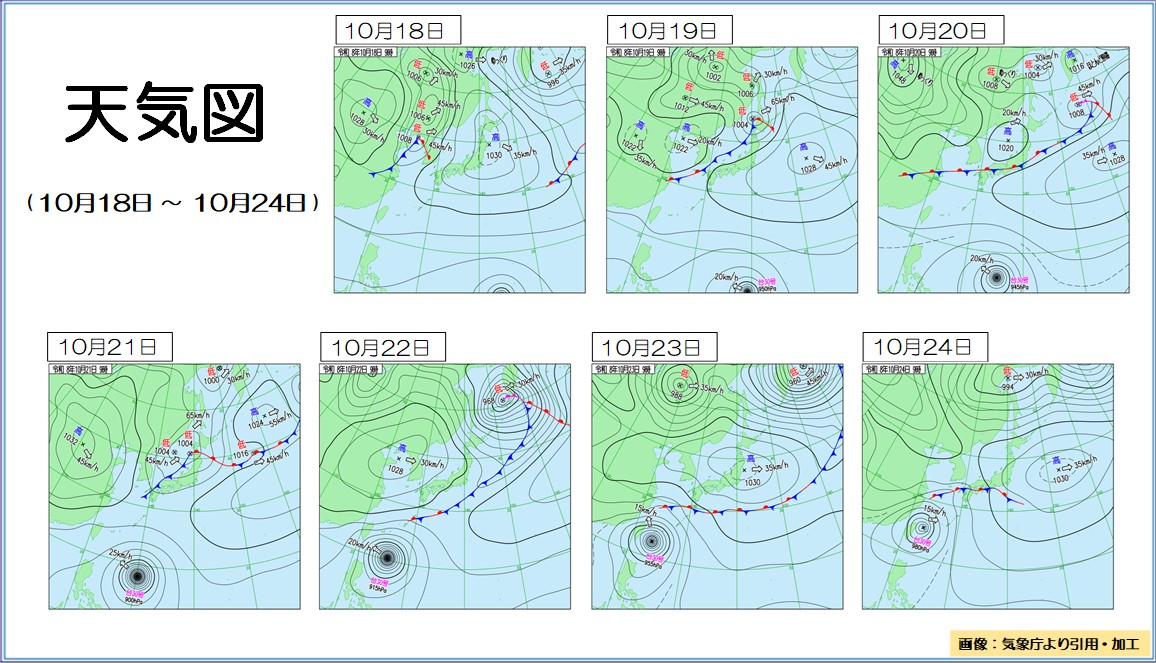
On the 18th, a low-pressure system accompanied by a front passed near the Korean Peninsula, while Typhoon No. 30 moved westward across the Mariana Islands. Japan was covered by a high-pressure system. On the 19th, Typhoon No. 30 moved west-northwest. A low-pressure system advanced toward the waters near the Kuril Islands, with a front extending across northern Japan and reaching as far as central China. On the 20th, a front extending from a low-pressure system remained stationary, stretching from east of Japan to central China. Typhoon No. 30 moved west-northwest east of the Philippines. A low-pressure system formed along the front over the Sea of ??Japan and moved northeast. On the 21st, Typhoon No. 30 continued moving west-northwest. A low-pressure system, intensifying rapidly, moved into the Sea of ??Okhotsk, while a front passed across the vicinity of Honshu. On the 22nd, Typhoon No. 30 moved west-northwest south of Okinawa. A low-pressure system intensified over the Sea of ??Okhotsk. Honshu came under the influence of a high-pressure system extending from the Asian continent, resulting in a "west-high, east-low" pressure pattern. On the 23rd, Typhoon No. 30 moved northward west of Yonaguni Island. A front remained stationary south of Japan, while Honshu was covered by a high-pressure system. On the 24th, Typhoon No. 30 moved northward near the Sakishima Islands. A front remained stationary, stretching from western to eastern Japan. During the evening, a low-pressure system formed along the front in the waters off the Kanto region and moved northeast.
Precipitation
On the 18th, localized rain occurred from the Pacific side of western Japan to the Nansei Islands, driven by moist air along the periphery of a high-pressure system. On the 19th, rain fell?primarily in northern and western Japan?due to the passage of a front and the influence of moist air along the periphery of a high-pressure system. Heavy rain was observed in Kochi Prefecture. On the 20th, a stationary front brought rain across regions from Northern to Western Japan. In Wakayama Prefecture, warm, moist air flowing along the edge of a high-pressure system caused extremely heavy rainfall, with 58.5 mm/h recorded in Nishikawa, Kozagawa Town. On the 21st, the passage of a front brought widespread rain across Honshu, while the Nansei Islands also experienced rain due to the influence of Typhoon No. 30. On the 22nd, a "west-high, east-low" pressure pattern developed; rain fell in the Hokuriku region, and the first snow of the season was observed in Wakkanai and Asahikawa, Hokkaido. In the Nansei Islands, rain accompanied by thunderstorms occurred due to Typhoon No. 30. On the 23rd, heavy rain associated with Typhoon No. 30 affected the Sakishima Islands in particular; Iriomote Island recorded a daily precipitation total of 322.0 mm, setting a new record for the month of October. A stationary front also brought heavy rain to the southern part of Kyushu. On the 24th, Typhoon No. 30 caused heavy rain, primarily in the Sakishima Islands. The influence of a front also led to heavy rainfall in areas such as the southeastern slopes of the Kii Peninsula and Tsushima in Nagasaki Prefecture; Owase City in Mie Prefecture recorded a daily precipitation total of 273.0 mm.
Temperatures
On the 18th, temperatures rose across Western Japan due to southerly winds on the trailing side of a high-pressure system, with some locations in Kyushu reaching "midsummer" levels (30C or higher). Inland areas experienced large diurnal temperature ranges; in Sugadaira, Nagano Prefecture, the difference between the daily high and low reached 21C. On the 19th, temperatures nationwide were higher than average, with some areas in southern Kyushu reaching midsummer levels. On the 20th, warm air to the south of a front kept temperatures across Honshu above average, and some locations in Kyushu again reached midsummer levels. On the 21st, strengthening southerly winds?directed toward a low-pressure system and a front?pushed temperatures nationwide above seasonal averages. A high of 33.6C was recorded in Hyuga City, Miyazaki Prefecture. On the 22nd, cold air moved southward toward Hokkaido, causing temperatures in some areas to drop to levels typical of November. Meanwhile, many locations across Honshu experienced "summer days" (daily highs of 25C or above). On the 23rd, the southward-moving cold air intensified the morning chill in Hokkaido, with the town of Rikubetsu recording a low of -5.9C. On the 24th, much of western and eastern Japan saw cloudy or rainy weather, and "midsummer-like" temperatures (daily highs of 30C or above) were limited to parts of the Southwestern Islands and southern Kyushu. In eastern Hokkaido, the influx of cold air combined with radiative cooling led to sub-zero morning temperatures in several locations.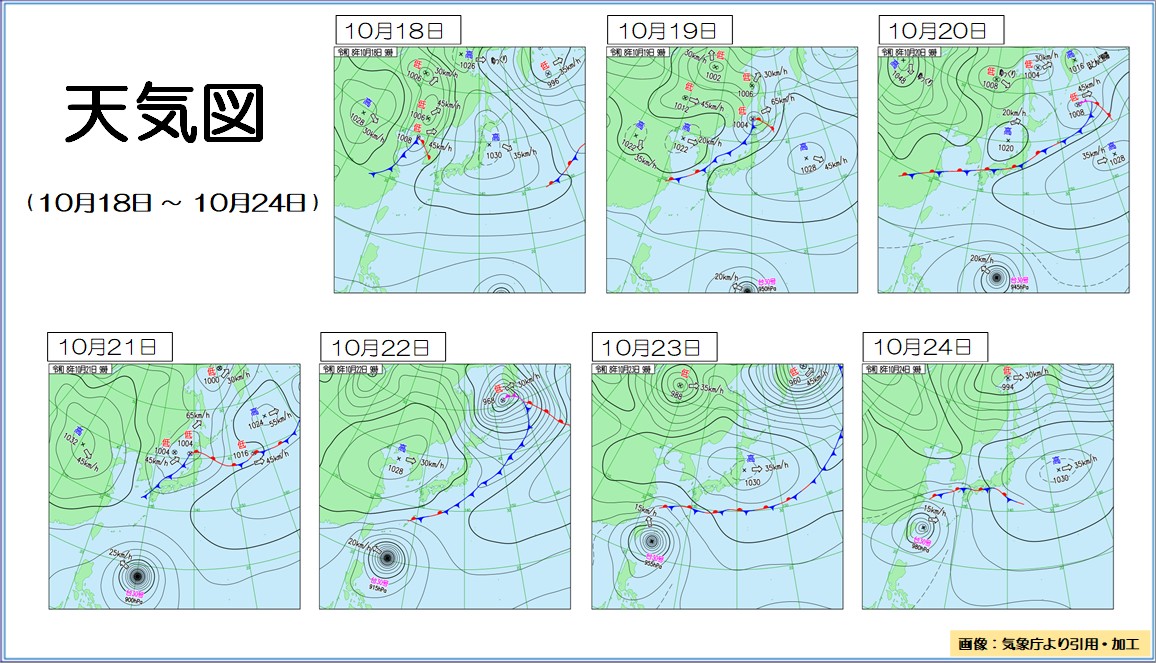
Summary of Weather for the Period (October 18 ? October 24)
Average temperatures were higher than normal across western and eastern Japan, influenced by warm air along the periphery of high-pressure systems. In western Japan, many locations saw temperatures more than 3C above the seasonal average. In northern Japan, temperatures were slightly above average, while in Hokkaido, they were mostly in line with seasonal norms.
Precipitation was high, particularly in the Southwestern Islands?affected by a typhoon?and along the Sea of ??Japan side of Honshu, which was impacted by low-pressure systems and fronts. Some areas along the Pacific coast of western Japan also experienced heavy rainfall due to moist, warm air flowing along the edge of a high-pressure system. Conversely, the Kanto region saw less precipitation than usual, as it was affected by low-pressure systems and fronts for a shorter duration.
Sunshine duration was below average nationwide; although some parts of the country were covered by high-pressure systems at times, the overall period was marked by the influence of typhoons, low-pressure systems, and fronts. In some areas?notably in western Japan?sunshine duration was significantly lower than normal; for instance, in Hiroshima, it reached only about 30% of the seasonal average.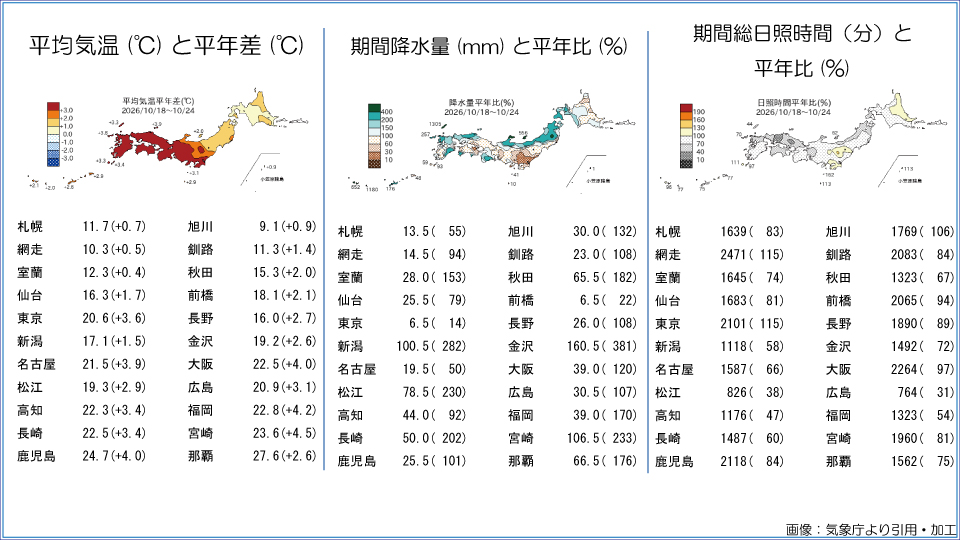
-
[Typhoon Information] Typhoon No. 31 is expected to maintain "very strong" intensity as it moves westward; please monitor its progress closely throughout the coming week.
2026/10/27 14:22
-
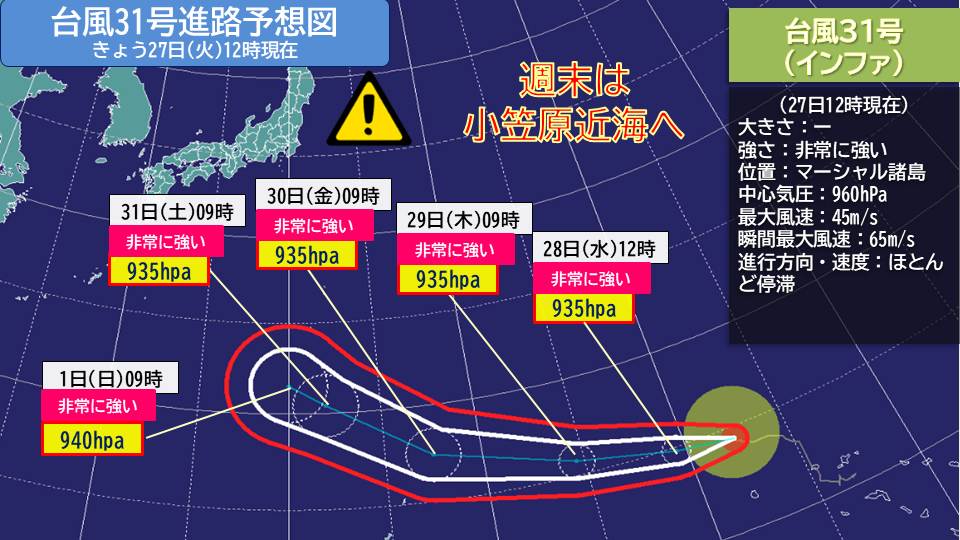
As of 12:00 PM today, Tuesday, October 27, Typhoon No. 31?a "very strong" typhoon?is located over the Marshall Islands and is remaining nearly stationary. It is a very powerful storm accompanied by a zone of violent winds; its central pressure is 960 hPa, with maximum sustained winds of 45 m/s near the center and maximum instantaneous wind gusts of 65 m/s.
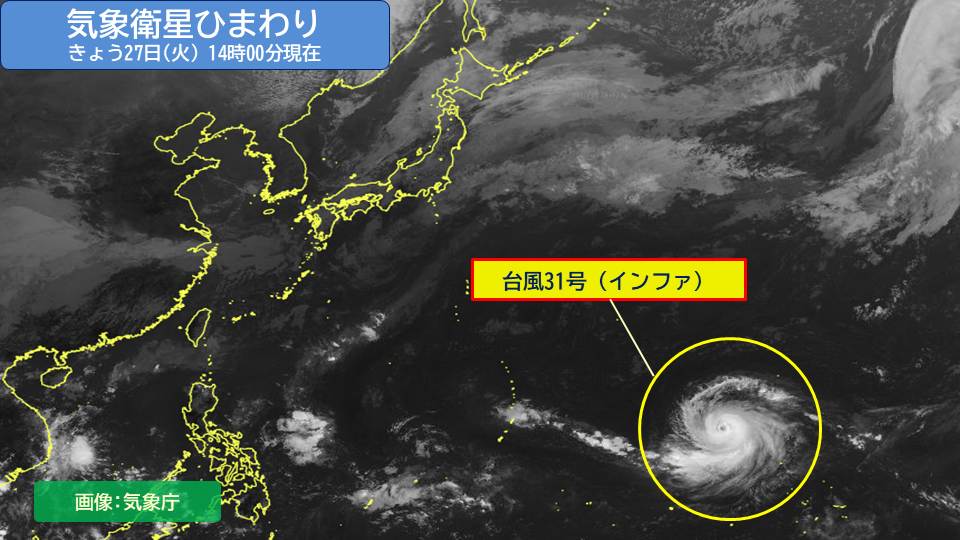
Typhoon No. 31 ? As of 12:00 PM, Tuesday, October 27
Location: Marshall Islands
Size Category: -
Strength Category: Very Strong
Movement: Nearly stationary
Central Pressure: 960 hPa
Maximum Sustained Wind Speed: 45 m/s (near the center)
Maximum Instantaneous Wind Speed: 65 m/s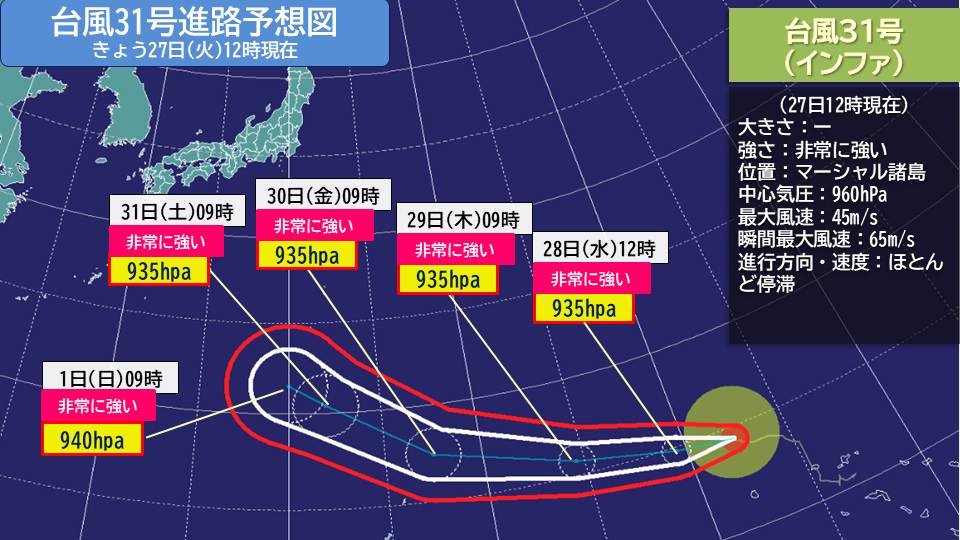
Typhoon No. 31 is expected to continue intensifying as it moves toward the waters near Minamitorishima by Thursday, October 29. It is then forecast to gradually pick up speed and continue moving westward, reaching the Mariana Islands by Friday, October 30. Subsequently, the system is expected to shift its course toward the north-northeast, potentially reaching the waters near the Ogasawara Islands on Sunday, November 1, while maintaining a very high level of intensity. At that stage, the central pressure is forecast to be 940 hPa, and the system will likely remain very strong.
While there is a consensus that the system will eventually turn from a northerly to a northeasterly direction, there remains significant uncertainty regarding the timing and exact location of this turn. Close attention should be paid to its future movement for the time being.
-
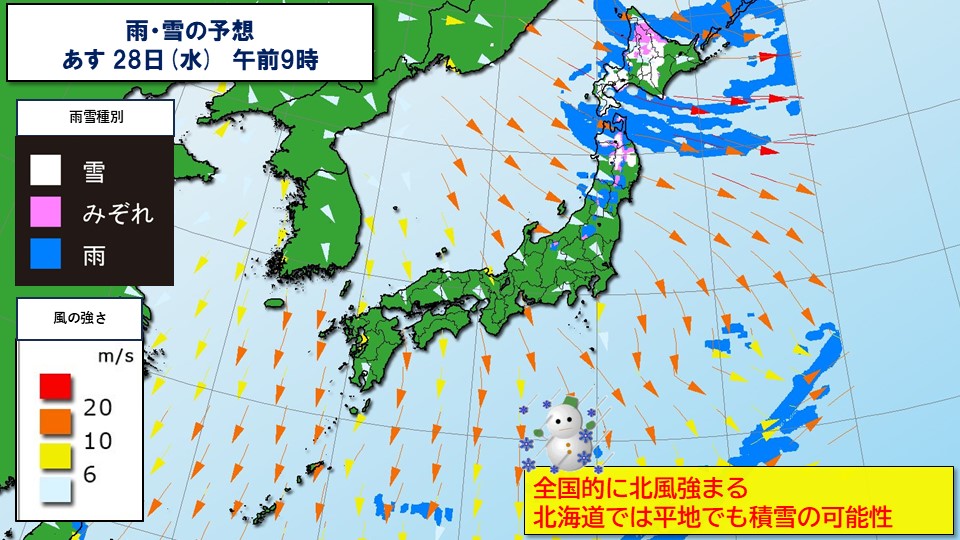
Tomorrow, Wednesday the 28th, strong northerly winds will develop across the country; snow is expected even in the lowlands of Hokkaido, and there is a possibility of the season’s first "kogarashi" (cold, northwesterly autumn wind) in Tokyo and the Kinki region.
2026/10/27 14:02
-
Starting tonight, Tuesday the 27th, the pressure pattern around Honshu will gradually shift to a "west-high, east-low" configuration. With isobars becoming more closely spaced in a north-south direction, northerly winds are expected to strengthen. Furthermore, from tonight through tomorrow, Wednesday the 28th, a strong cold air mass?sufficient to bring snow even to low-lying areas?is forecast to move southward over northern Japan.
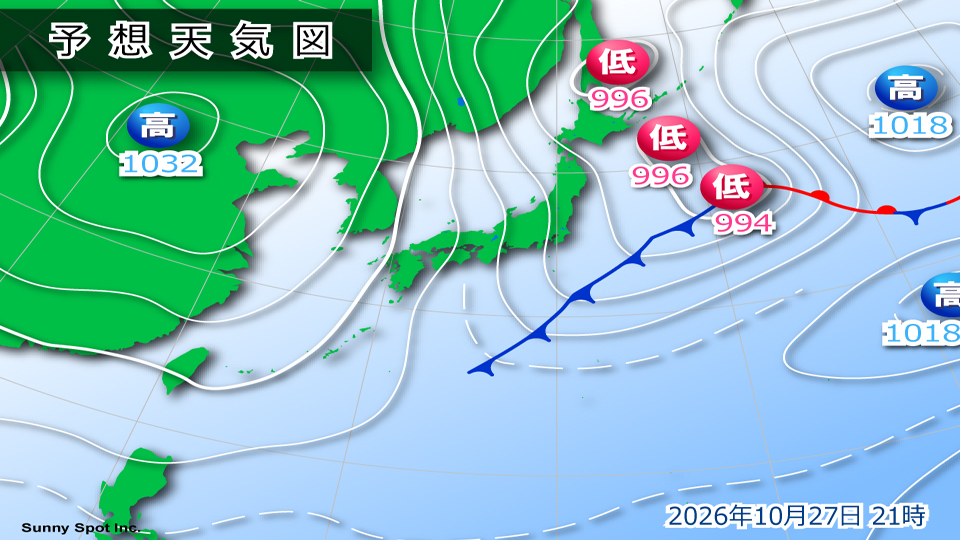
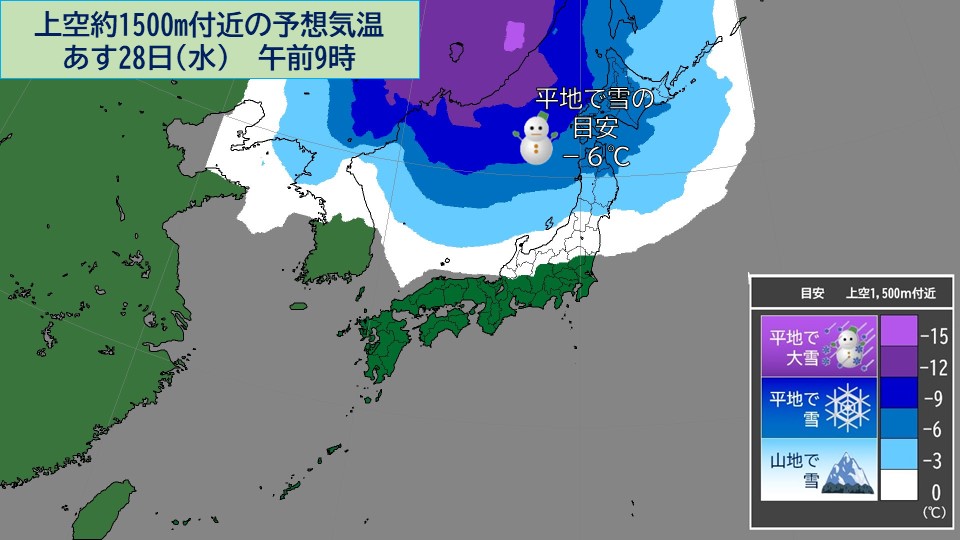
In Hokkaido, the southward movement of this cold air will bring cold rain and snow tomorrow, Wednesday the 28th, with snow likely to accumulate even in low-lying areas. Snow is also expected in mountainous regions of northern Tohoku and at higher elevations across eastern Japan.
Across the country, northerly winds will intensify, leading to rough weather?characterized by cold rain and snow?along the Sea of ??Japan side of northern Japan and in the Hokuriku region. Hokkaido, in particular, may experience blizzards, while the Sea of ??Japan side of the Tohoku region and Sado Island in Niigata Prefecture could face severe, warning-level winds. Coastal areas may see rough seas accompanied by swells; please remain vigilant and exercise caution regarding severe winds, blizzards, and high waves. If you are driving, please be extra careful due to reduced visibility and deteriorating road conditions, and be sure to check the latest traffic information.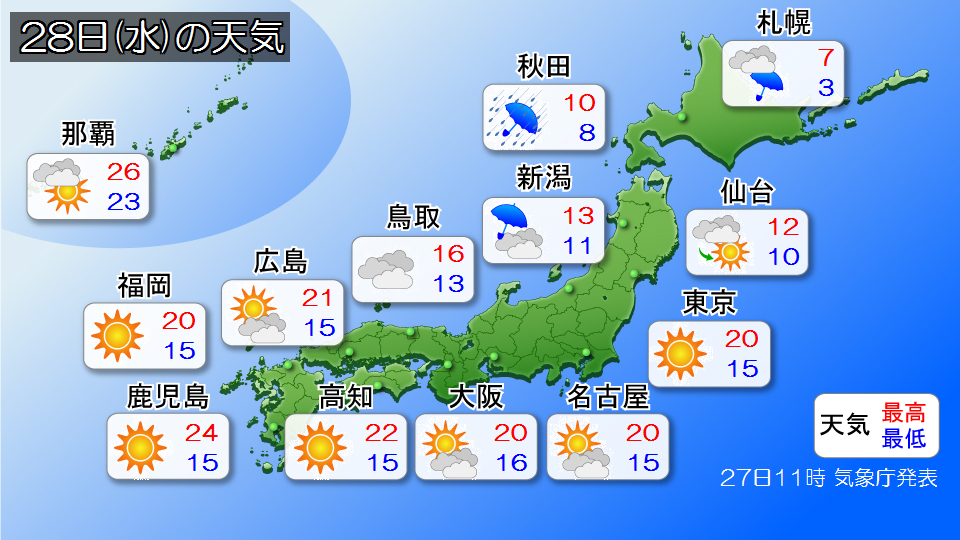
Across eastern and western Japan, strong northerly winds will blow, making it feel quite cold. Please exercise caution tomorrow regarding potential hazards such as flying debris or falling trees caused by these strong winds. In the Tokyo and Kinki regions, the Japan Meteorological Agency may announce the arrival of the season's first "kogarashi" (a strong, cold, seasonal north wind).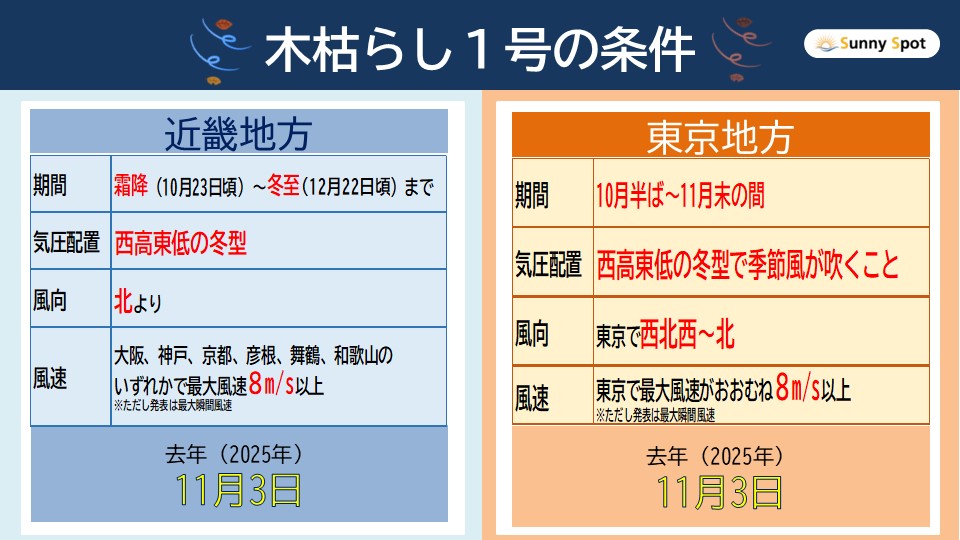
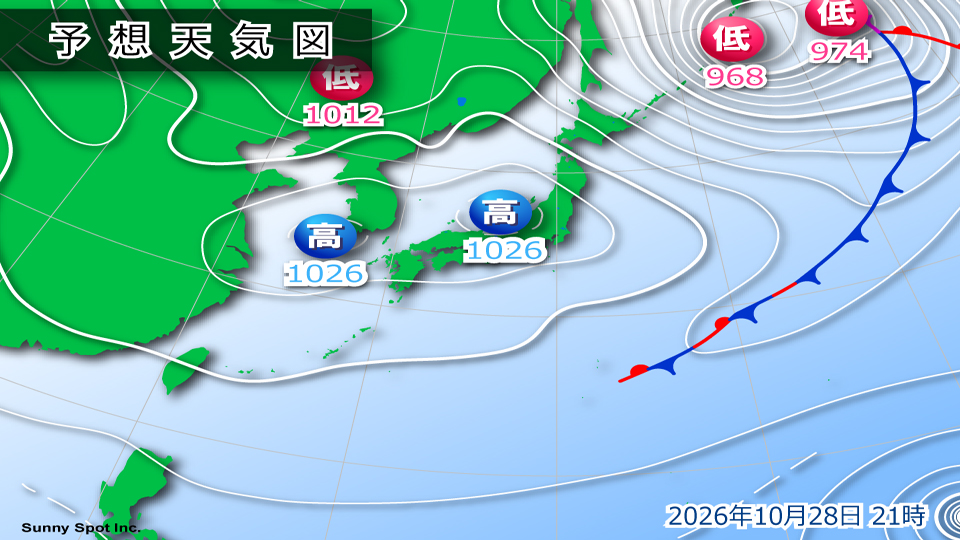
The "west-high, east-low" pressure pattern?characterized by high pressure to the west and low pressure to the east?will not persist; the strong winds across western and eastern Japan are expected to subside in many areas by this evening. However, temperatures will drop significantly tonight, and by the morning of Thursday the 29th, some areas may experience their coldest temperatures of the autumn so far. Please take care to avoid health issues that can arise from sudden changes in temperature.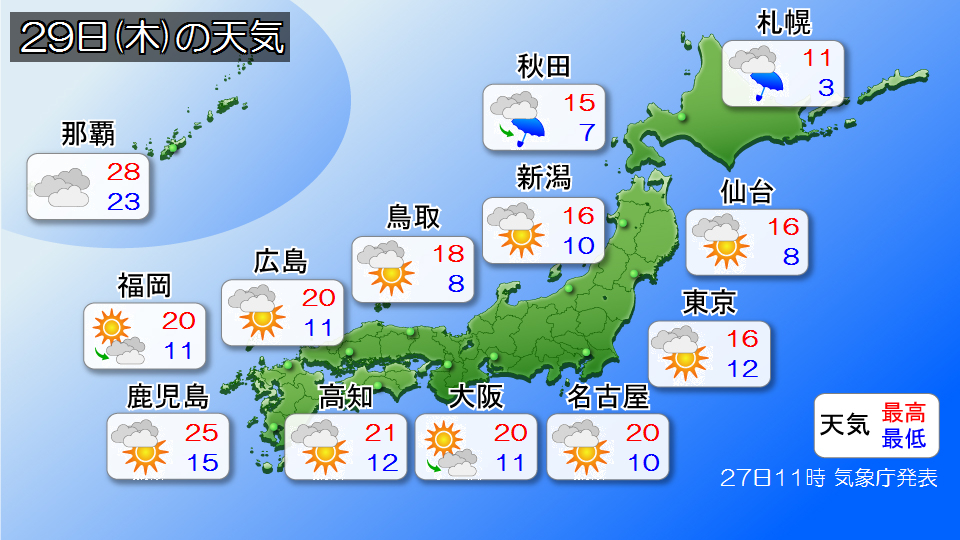
-
Weather for tomorrow, Tuesday the 27th: Strong winds expected nationwide due to a winter-type pressure pattern.
2026/10/26 13:32
-
As of 11:00 a.m. today, Monday the 26th, a low-pressure system?which originated from Typhoon No. 30?is located over the sea west of Kyushu, with a front extending from it toward Japan. Warm, moist air is flowing toward this front, causing rain across a wide area spanning from Western to Eastern Japan.
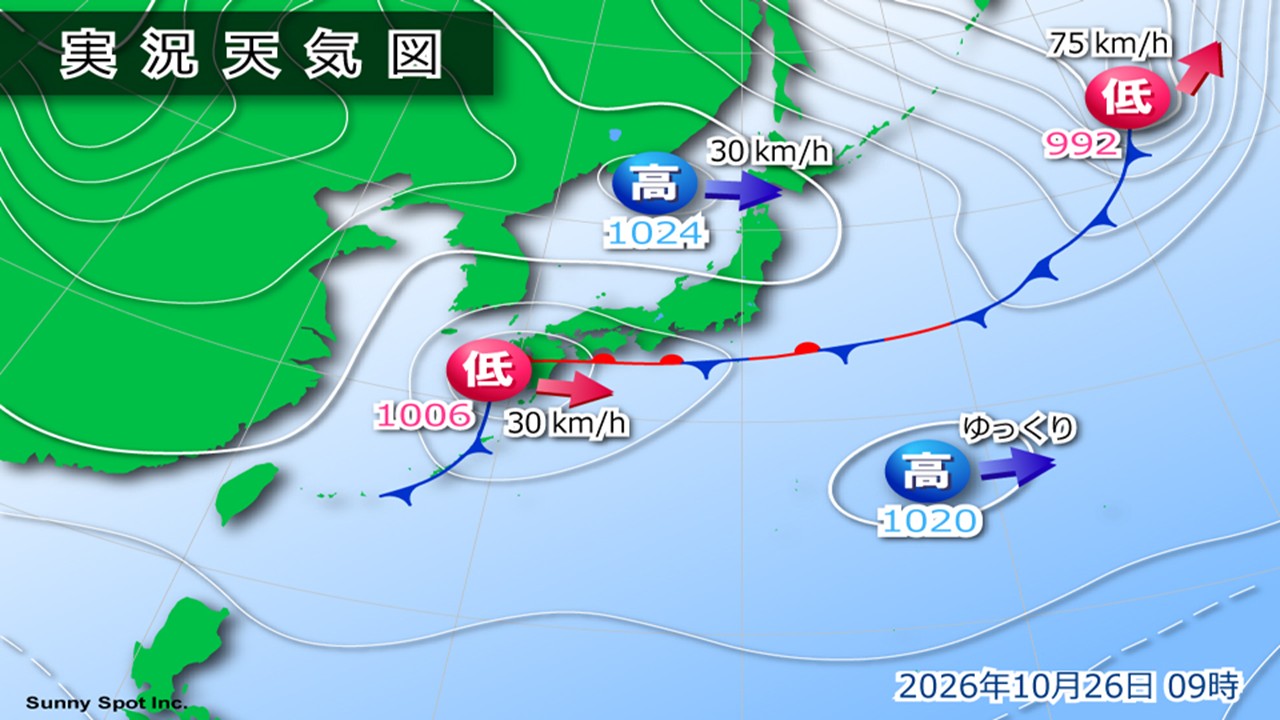
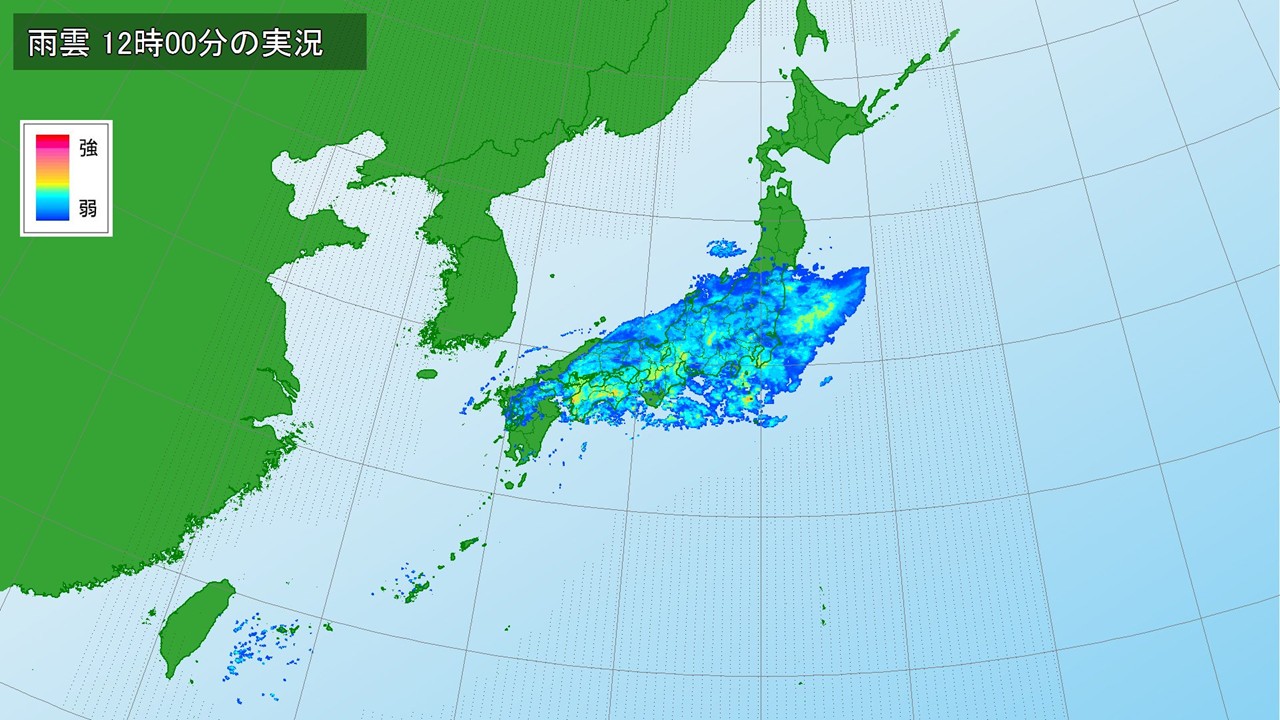
This low-pressure system is expected to pass over Kyushu this evening and move toward the east of Japan by the night of tomorrow, Tuesday the 27th.
Meanwhile, another low-pressure system is set to develop near Hokkaido.
At the same time, a high-pressure system will extend from the Asian continent, shifting the pressure pattern around Japan to a "winter-type" configuration?characterized by high pressure to the west and low pressure to the east.
As the pressure gradient steepens, winds are expected to strengthen nationwide; please exercise caution regarding strong winds.
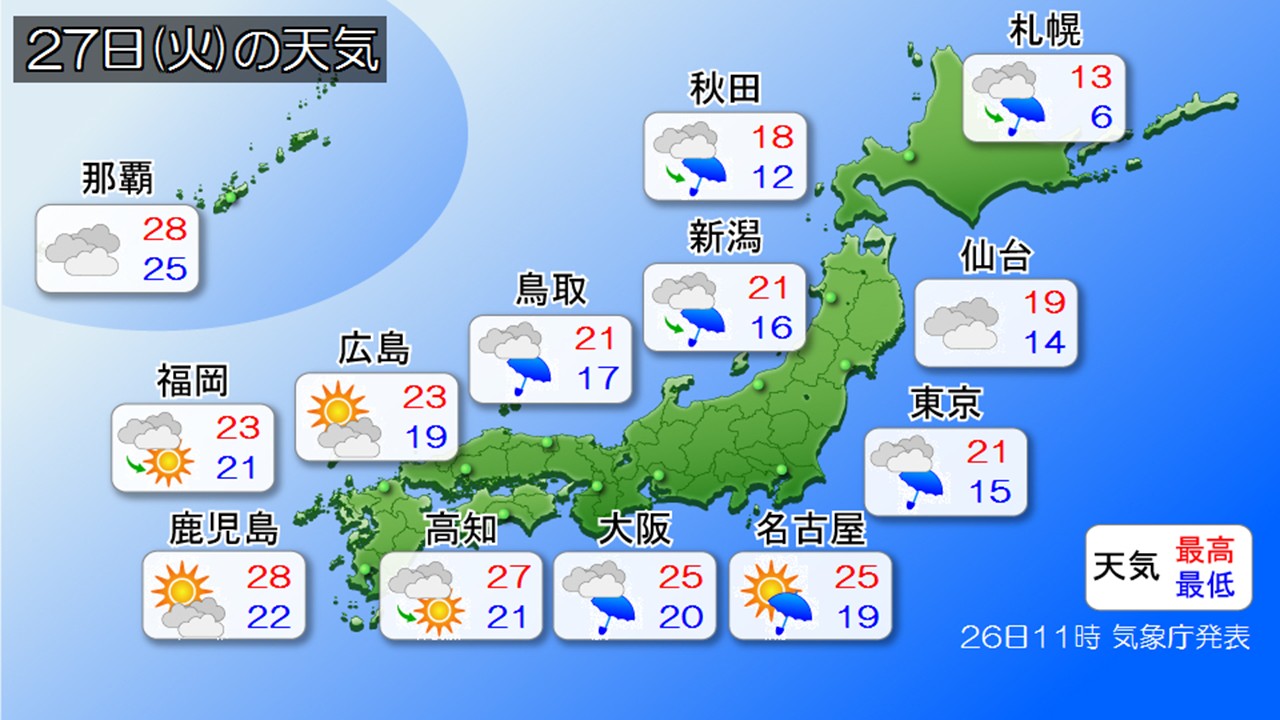
Weather in Western Japan
Rain will continue, particularly in the Kinki region, until the early hours of the morning, but it is expected to taper off in many areas by dawn.
Sunny spells will gradually increase, especially along the Pacific coast. Conversely, areas in the San'in region and the northern part of the Kinki region may experience intermittent rain.
Weather in Eastern Japan
Due to the influence of the low-pressure system and the front, rain is expected in many areas throughout the morning. In the Kanto and Tokai regions, caution is advised regarding heavy rainfall, which may persist until tomorrow morning.
Conditions will gradually improve in the afternoon, with sunny intervals appearing in many places. Meanwhile, the Hokuriku region will remain mostly cloudy, with rain expected in some areas starting from the evening.
Weather in Northern Japan
Conditions are expected to deteriorate gradually from the afternoon, starting along the Sea of ??Japan coast.
As the atmosphere becomes unstable, please be cautious of lightning strikes and sudden gusts of wind.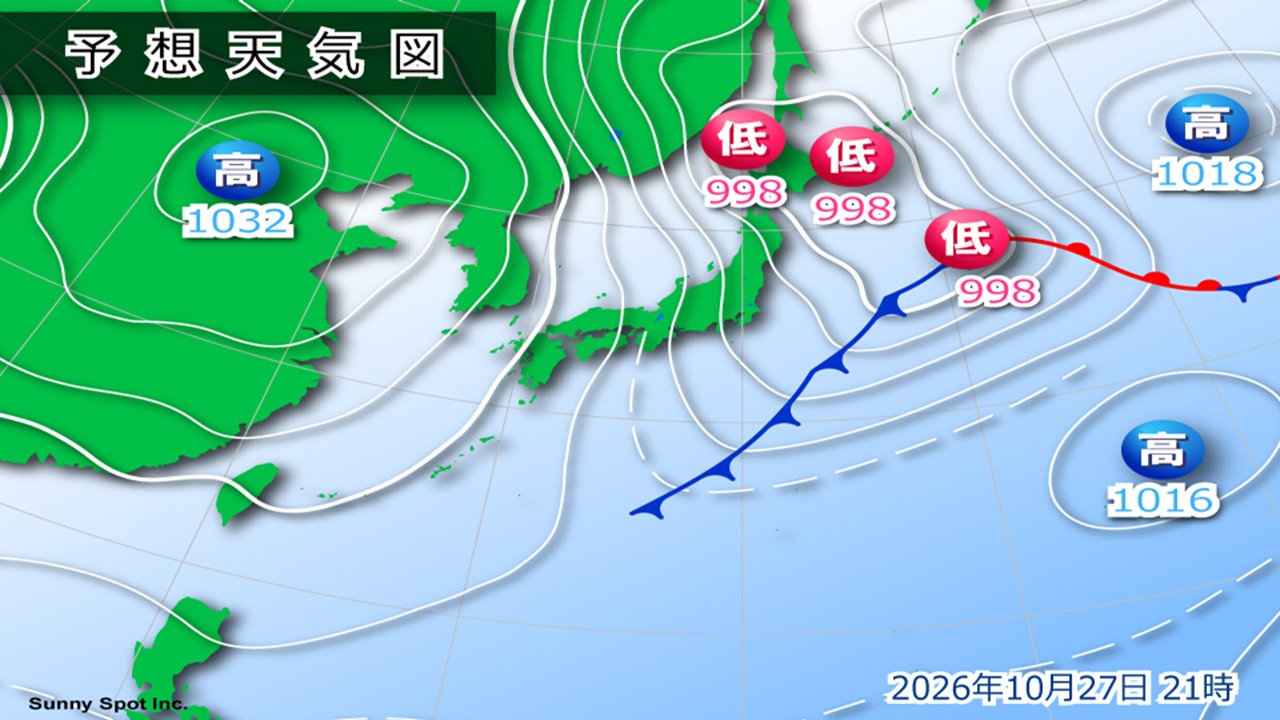
-
Weather for tomorrow, Tuesday the 27th: Strong winds expected nationwide due to a winter-type pressure pattern.
2026/10/26 12:17
-
As of 11:00 a.m. today, Monday the 26th, a low-pressure system?which originated from Typhoon No. 30?is located over the sea west of Kyushu, with a front extending from it toward Japan. Warm, moist air is flowing toward this front, causing rain across a wide area spanning from Western to Eastern Japan.
This low-pressure system is expected to pass over Kyushu this evening and move toward the east of Japan by the night of tomorrow, Tuesday the 27th.
Meanwhile, another low-pressure system is set to develop near Hokkaido.
At the same time, a high-pressure system will extend from the Asian continent, shifting the pressure pattern around Japan to a "winter-type" configuration?characterized by high pressure to the west and low pressure to the east.
As the pressure gradient steepens, winds are expected to strengthen nationwide; please exercise caution regarding strong winds.
Weather in Western Japan
Rain will continue, particularly in the Kinki region, until the early hours of the morning, but it is expected to taper off in many areas by dawn.
Sunny spells will gradually increase, especially along the Pacific coast. Conversely, areas in the San'in region and the northern part of the Kinki region may experience intermittent rain.
Weather in Eastern Japan
Due to the influence of the low-pressure system and the front, rain is expected in many areas throughout the morning. In the Kanto and Tokai regions, caution is advised regarding heavy rainfall, which may persist until tomorrow morning.
Conditions will gradually improve in the afternoon, with sunny intervals appearing in many places. Meanwhile, the Hokuriku region will remain mostly cloudy, with rain expected in some areas starting from the evening.
Weather in Northern Japan
Conditions are expected to deteriorate gradually from the afternoon, starting along the Sea of ??Japan coast.
As the atmosphere becomes unstable, please be cautious of lightning strikes and sudden gusts of wind.
-
[Typhoon Information] Strong Typhoon No. 31 (In-fa) is moving westward through the Marshall Islands; potential to affect the Ogasawara Islands.
2026/10/26 11:56
-
Here is an update on the typhoons. Typhoon No. 30 weakened into an extratropical cyclone over the East China Sea at 9:00 p.m. yesterday, Sunday the 25th. As it moves eastward near Kyushu, accompanied by a front, please remain on alert for heavy rain across western and eastern Japan.In the northern Kyushu region, please remain on alert for violent winds and exercise caution regarding high waves accompanied by swells.
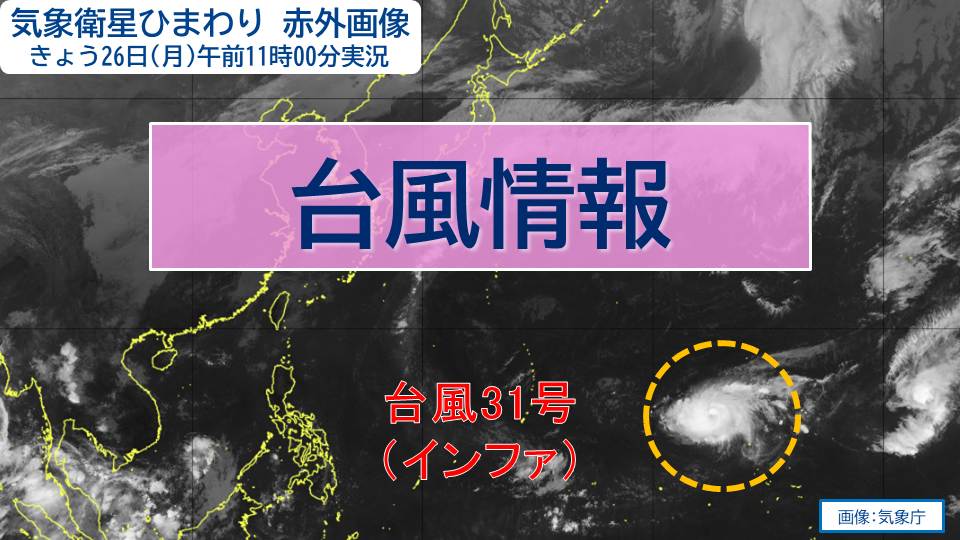
Meanwhile, as of 9:00 a.m. today, Monday the 26th, the strong Typhoon No. 31 (In-fa) is located in the Marshall Islands, moving westward at a speed of approximately 20 km/h. It has a central pressure of 985 hPa, with maximum sustained winds of 35 m/s near the center and maximum instantaneous gusts of 50 m/s. Within a 75 km radius of the center, the storm is producing winds of 25 m/s or greater.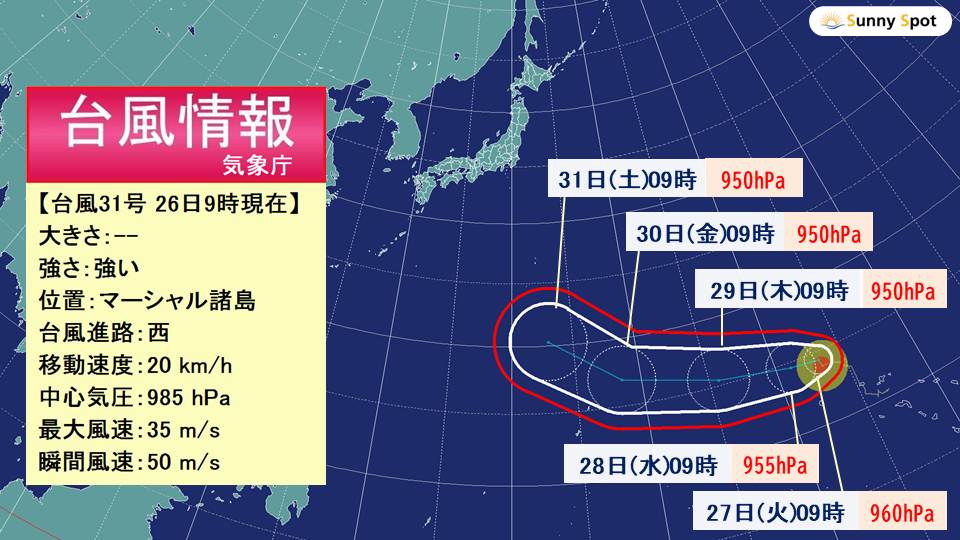
# Typhoon No. 31 - Monday the 26th, 9:00 a.m.
------------------------------------
Strength: Strong
Location: Marshall Islands
Movement: Westward at 20 km/h
Central Pressure: 985 hPa
Maximum Sustained Winds: 35 m/s (near the center)
Maximum Instantaneous Gusts: 50 m/s
------------------------------------
Typhoon No. 31 is expected to continue moving westward while intensifying; by Wednesday the 28th, it is projected to reach "very strong" status in the vicinity of Wake Island. It will continue to move westward, and by Saturday the 31st, it is expected to reach the waters near the Ogasawara Islands while remaining a very strong typhoon.
Although there is still some uncertainty regarding its exact path, it may affect the Ogasawara Islands from this weekend through the beginning of next week.
Please be sure to check the latest typhoon information.
-
[Risk of heavy rain in Western Japan] Weather for today, Monday the 26th: Typhoon 30 has weakened into a extratropical cyclone; remain on alert for heavy rain.
2026/10/26 11:34
-
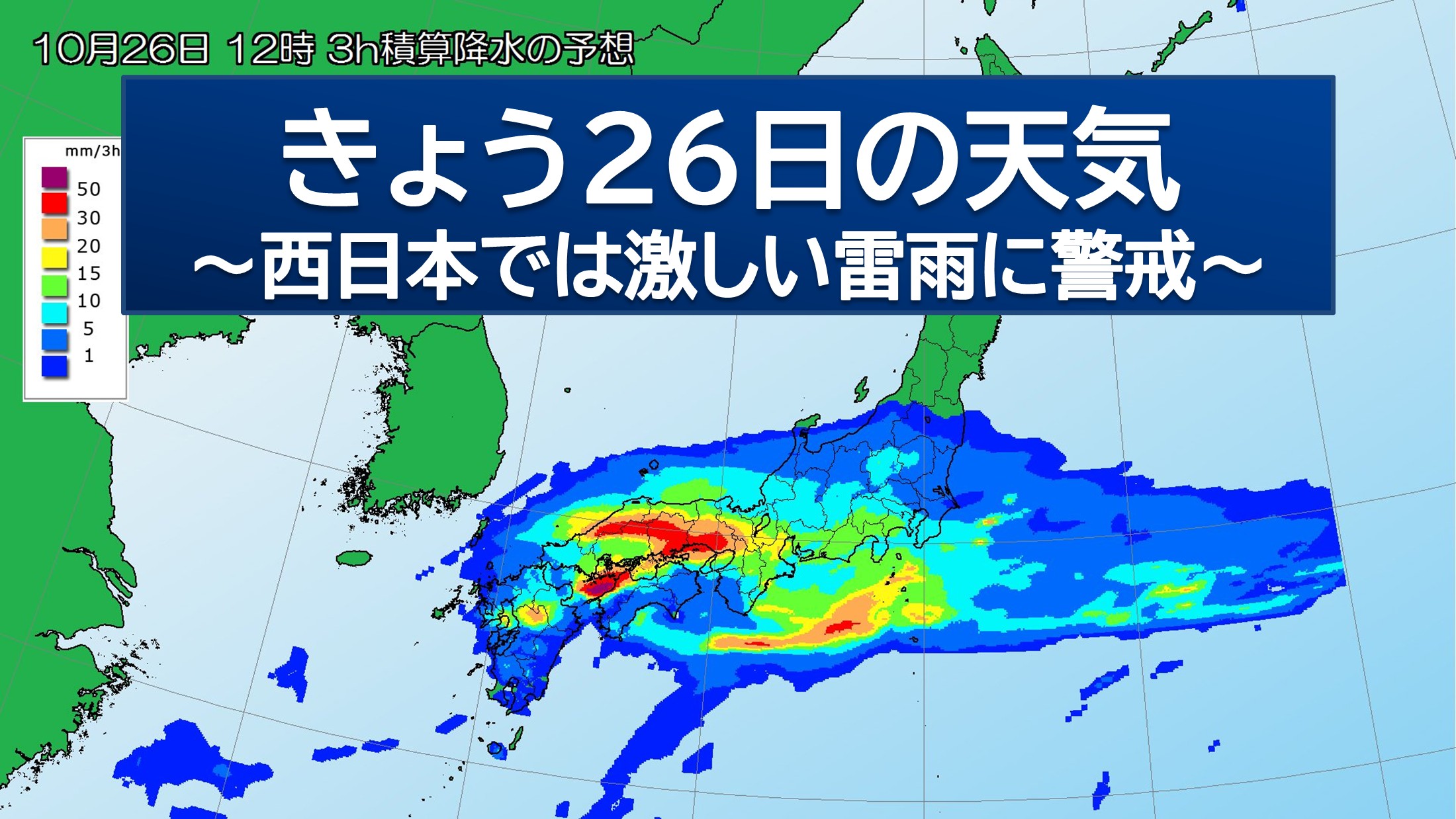
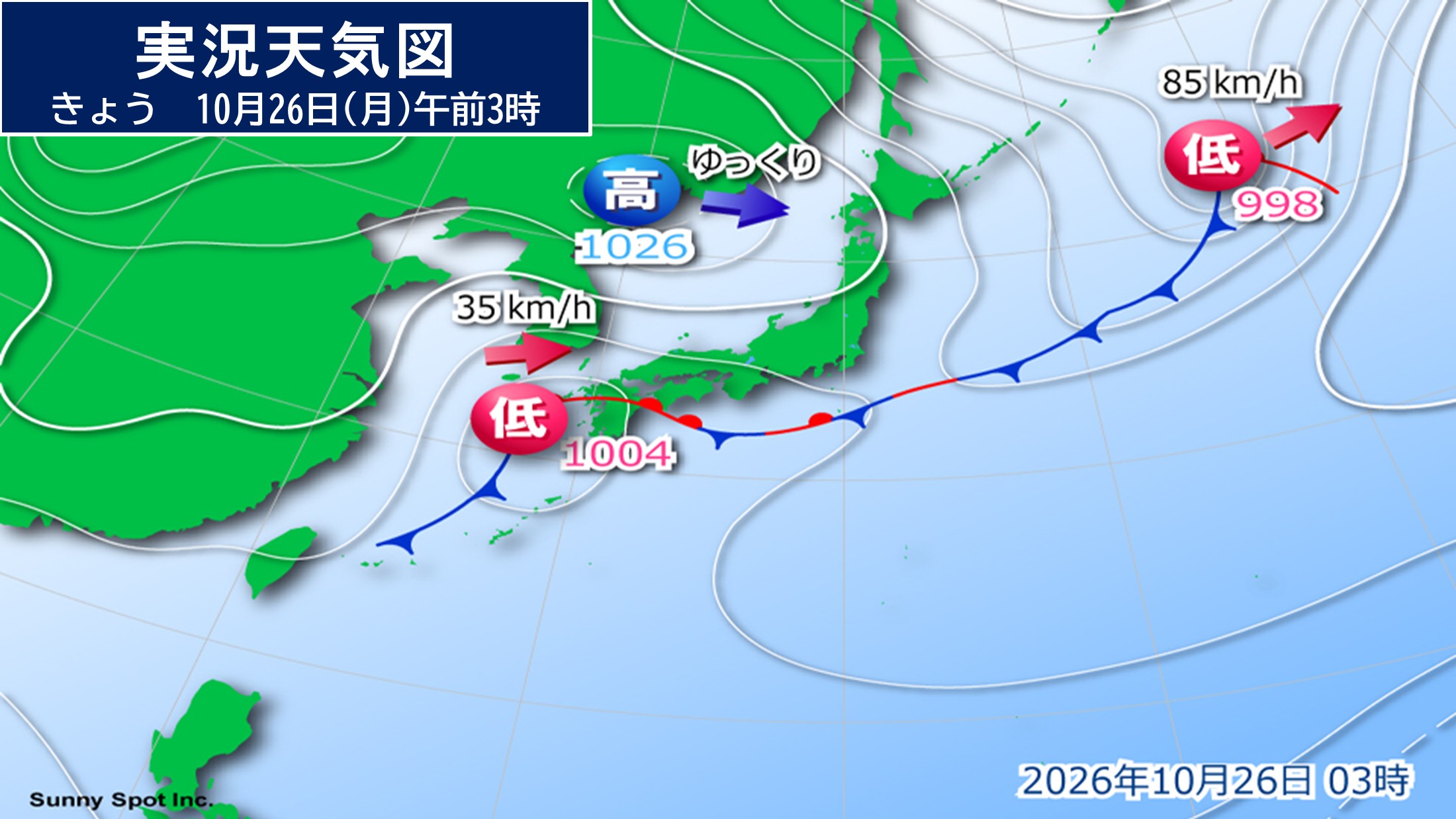
At 9:00 PM on Sunday, the 25th, Typhoon No. 30 transitioned into an extratropical cyclone over the East China Sea. It is expected to move toward southern Kyushu, accompanied by a weather front. Today, Monday the 26th, warm, moist air is flowing into the vicinity of a front that stretches from the East China Sea to the waters off the Sanriku coast. This will bring rain to western and eastern Japan, with the potential for heavy rainfall in western Japan.
Even though it has transitioned into an extratropical cyclone, there remains a risk of heavy rain; please stay alert for localized, intense thunderstorms.
Weather in Western Japan
Warm, moist air is flowing toward the front, and active rain clouds are expected to spread?particularly in northern Kyushu, the Chugoku region, and the Pacific-facing areas of the Kinki region. As some areas may experience localized, intense rainfall, please remain cautious regarding landslides, rising river levels, flooding, and inundation in low-lying areas.
In the Kyushu region, the front is expected to pass through by the evening, leading to an improvement in weather conditions.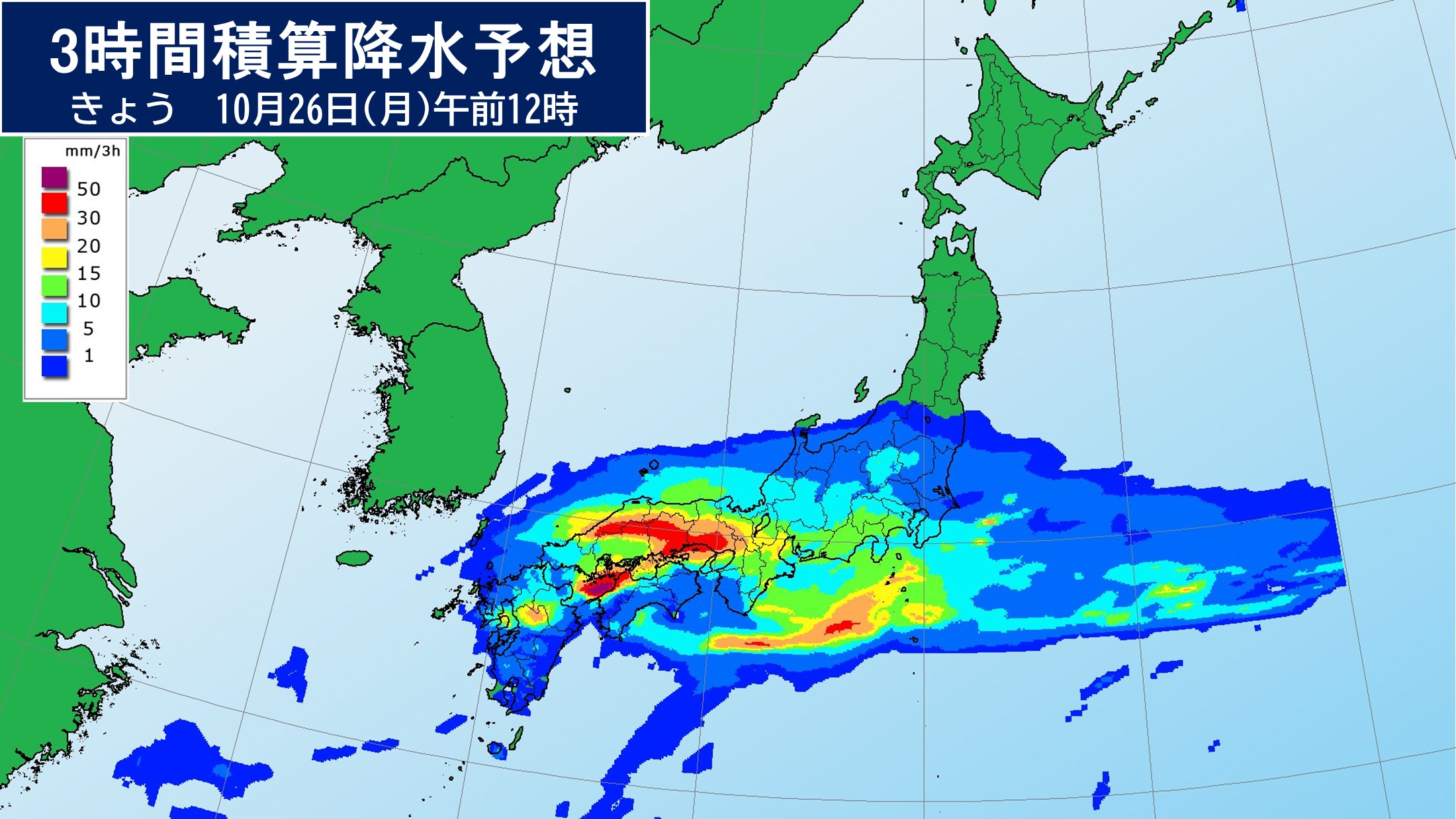
Weather in Eastern Japan
Due to the influx of warm, moist air toward the front, rain is expected across eastern Japan?concentrated in the Tokai region and the Pacific-facing areas of the Kanto region?with some places likely to see heavy downpours.
Furthermore, as eastern Japan will be situated on the northern side of the front, the combination of rain and the current air mass will result in a chilly day, with high temperatures hovering around 20C. Please be mindful of the temperature difference compared to the previous day.
Weather in Northern Japan
Northern Japan will largely be under the influence of a high-pressure system, leading to sunny skies in many areas. In Hokkaido, the weather is expected to feel like autumn, with daily high temperatures hovering around 15C.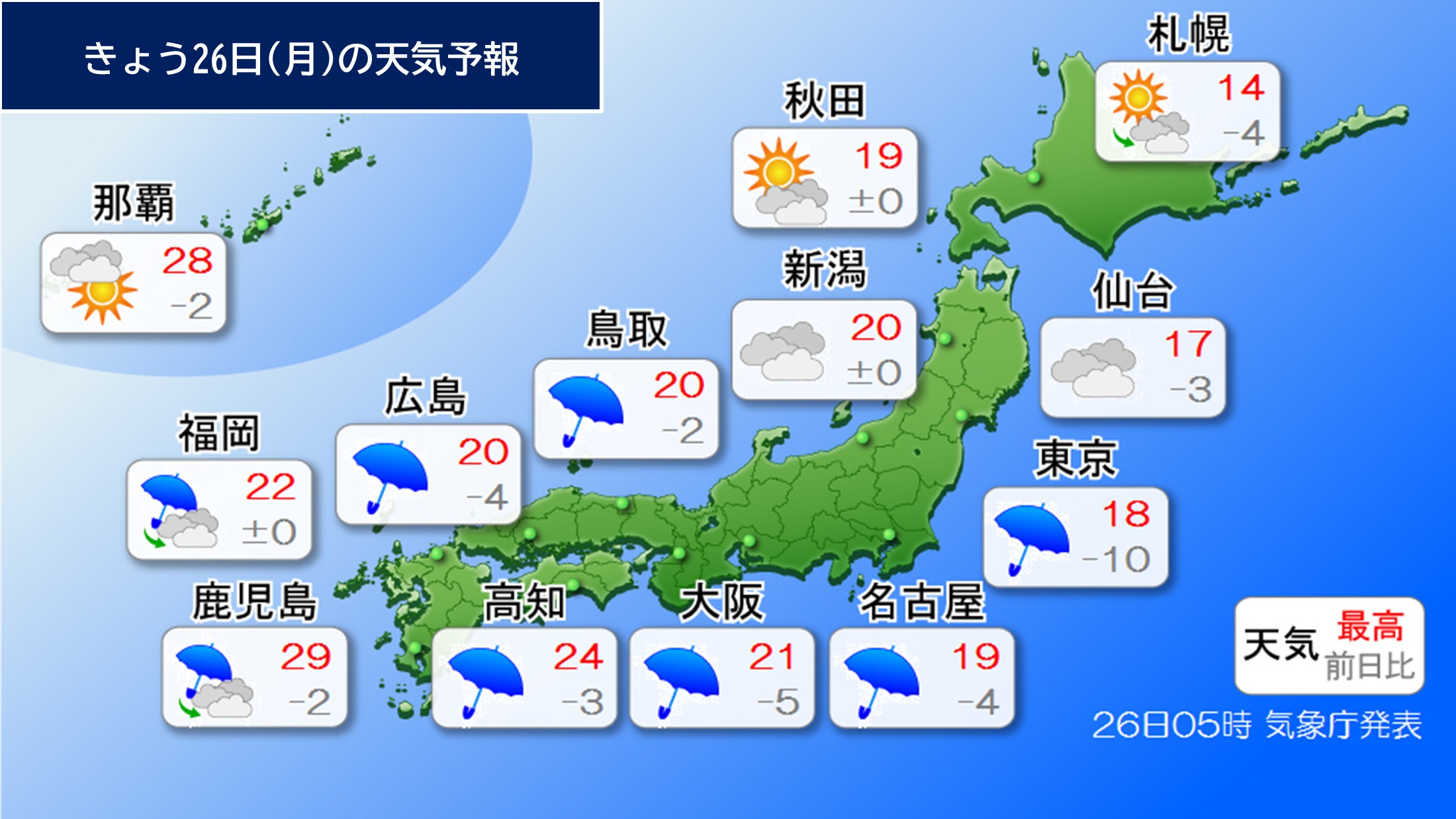
-
[Weekly Weather] Unsettled weather expected this week due to low-pressure systems and moist air.
2026/10/25 19:57
-
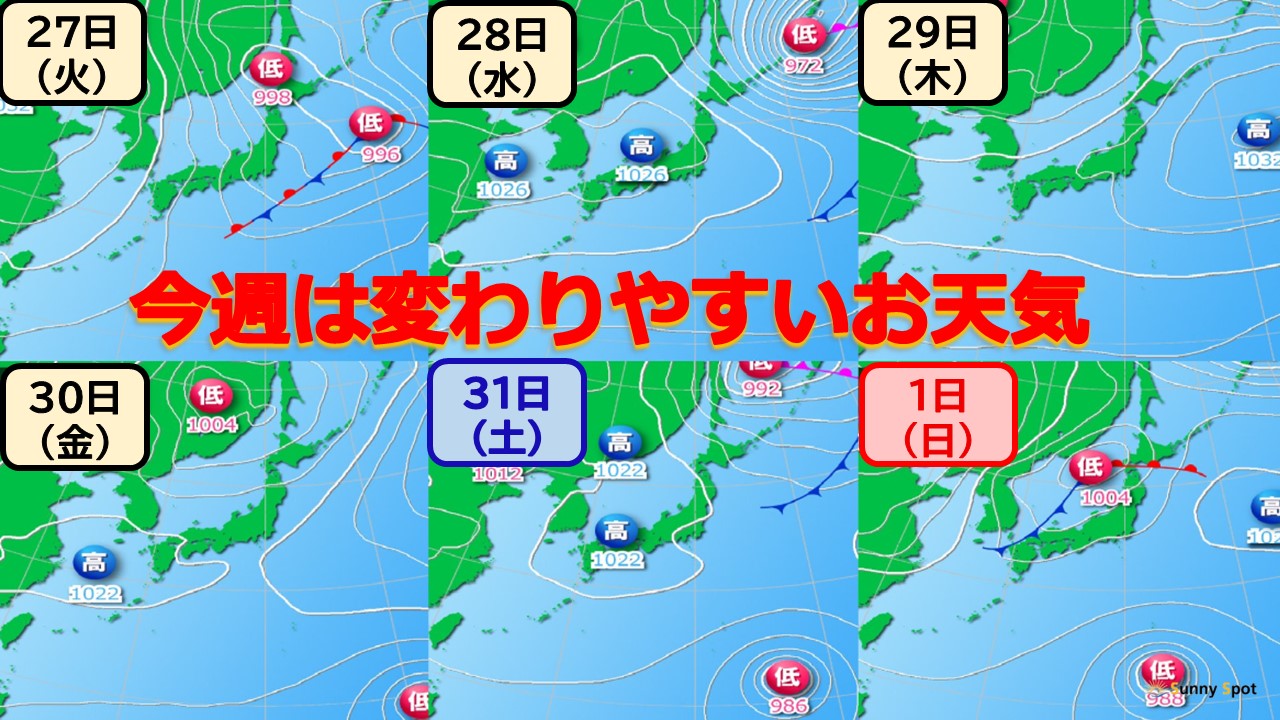
Today, the 25th, a front extending from a low-pressure system east of Japan remains stationary near the southern coast of Honshu.
Typhoon No. 30 is moving northeast across the East China Sea and is approaching this front.
Warm, moist air from the typhoon is flowing toward the front, resulting in heavy rainfall in some areas across eastern and western Japan.
Typhoon No. 30 is expected to continue moving eastward through tomorrow, the 26th, and is projected to transition into an extratropical cyclone by the morning of the 26th.
A new low-pressure system is forming along the front near the Izu Islands; it is expected to intensify as it moves eastward, passing to the east of Japan, through Tuesday the 27th.
As a result, significant rainfall is expected?particularly across Kyushu and the Pacific-facing regions of western Japan?with some areas likely to experience heavy rain accompanied by thunderstorms.
In eastern Japan, caution is advised through the 27th regarding the potential for lightning strikes, sudden gusts of wind, and localized heavy downpours.
Once the typhoon and low-pressure systems have passed, the weather around Honshu will clear up temporarily on Wednesday and Thursday; however, Hokkaido may see snow due to the influence of a low-pressure system near the Kuril Islands.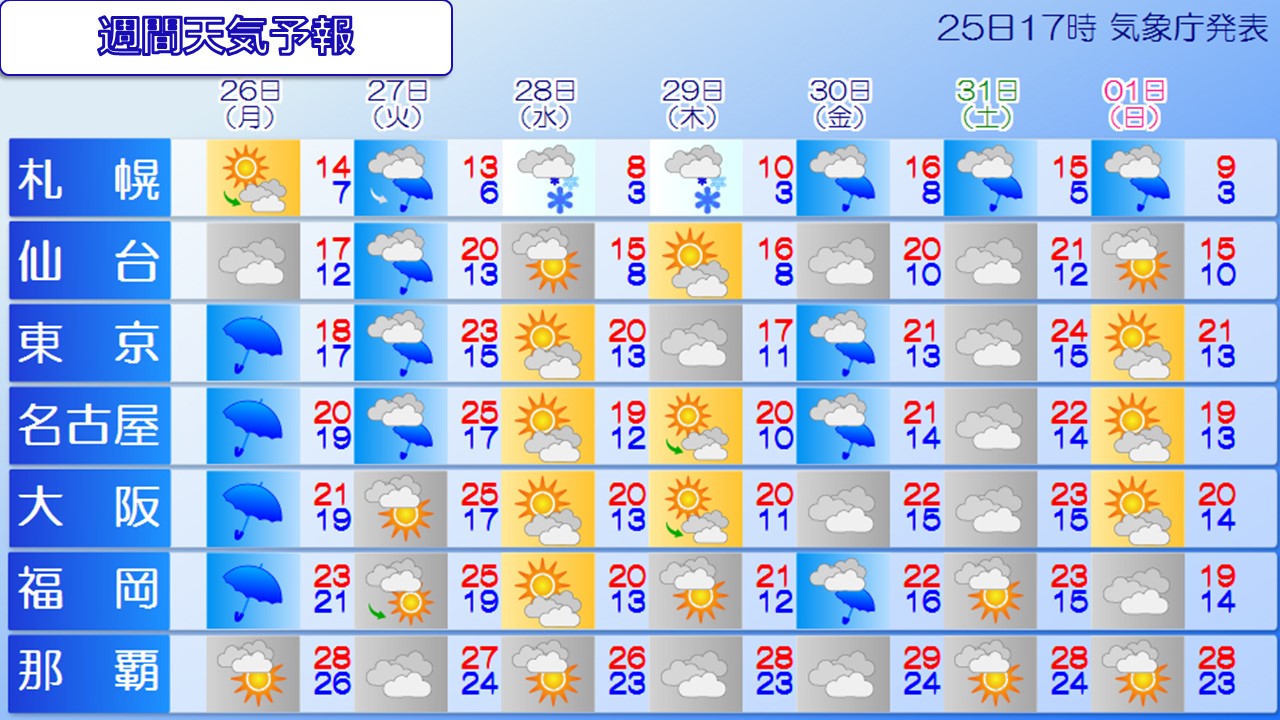
Later in the week, the weather is likely to deteriorate once again across the country.
Please stay alert to the changeable weather conditions and keep an eye on the latest weather forecasts.